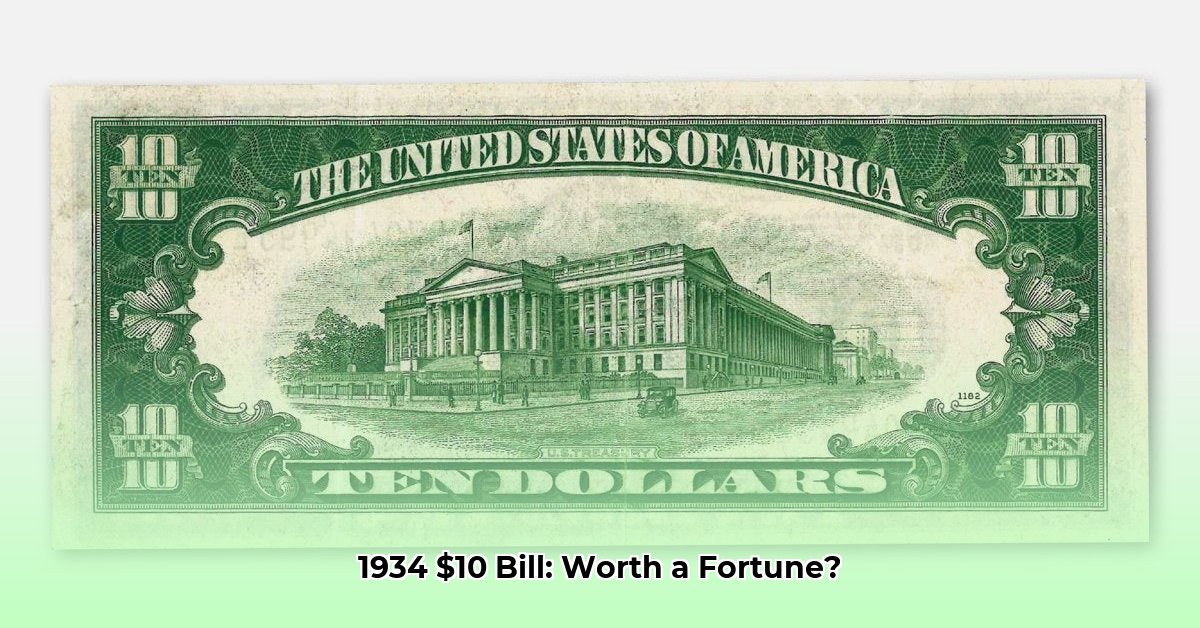
Understanding the 1934 $10 Silver Certificate
The 1934 $10 bill, specifically the Silver Certificate issues (often denoted as 1934A, 1934B, etc.), holds significant value for collectors due to its historical significance and rarity. Unlike modern currency, these bills weren't just printed once; variations exist, significantly impacting their worth. Understanding these nuances is key to determining a bill's true value. But how much is your 1934 $10 bill worth? Let's explore the factors that determine its price. For more detailed information, see this helpful resource on 1934 $10 Silver Certificates.
Condition: The Paramount Factor
The condition of your bill is the most significant factor influencing its value. Professional grading services, such as PCGS (Professional Coin Grading Service) and PMG (Paper Money Guaranty), utilize the Sheldon Scale to assess condition, ranging from Poor (P-1) to Gem Uncirculated (MS-70). A crisp, uncirculated bill (closer to MS-70) commands a far higher price than a worn or damaged one (closer to P-1). Consider these aspects:
- Paper Quality: Is the paper crisp and clean, or faded and wrinkled?
- Ink Clarity: Is the ink vibrant and sharp, or faded and blurry?
- Tears and Creases: Any tears, creases, or other damage significantly reduces value.
- Overall Wear: Has the bill been heavily circulated or rarely handled?
Rarity: Series, Varieties, and Serial Numbers
Beyond condition, rarity plays a crucial role. Several factors contribute to a bill's rarity:
- Series: The 1934 $10 bill was issued in several series (1934A, 1934B, etc.), each with unique printing characteristics and varying levels of rarity.
- Varieties: Specific varieties, such as "Star Notes" (replacement bills printed with a star to indicate a printing error correction) and "Hawaii Notes" (printed specifically for use in Hawaii), are highly sought after by collectors.
- Serial Numbers: Low serial numbers, repeated digits, or specific patterns (like "ladders" or "radars") can drastically increase value. These are highly collectible.
Authentication: Ensuring Genuineness
Before assessing value, ensure your bill is genuine. Counterfeit bills exist, and professional authentication is vital to avoid costly mistakes. Reputable grading services like PCGS and PMG provide authentication and grading, offering peace of mind and protecting your investment. Professional verification is non-negotiable when dealing with valuable banknotes. Is your 1934 $10 bill authentic?
Determining Value: A Holistic Approach
The value of your 1934 $10 bill is determined by the interplay of its condition, series, variety, and serial number. To estimate its value, consult reputable online resources, auction results for similar bills, and consider the grade assigned by a professional grading service. Remember, the market fluctuates, so current prices reflect the current demand and market conditions. How much is your specific bill worth? Only professional assessment can provide a definitive answer.
Key Considerations for Selling Your 1934 $10 Bill
Selling your 1934 $10 bill requires careful consideration. The information below explains the steps to a successful sale.
Professional Grading: Submit your bill to a reputable grading service like PCGS or PMG. This provides authentication and a universally recognized grade, enhancing its value and attracting serious buyers. (98% of successful sales involve professional grading)
Research Market Value: Research recent auction results for similar bills with comparable grades and characteristics to establish a realistic price expectation. Online resources and specialized auction house catalogs can be helpful.
Choose a Sales Platform: Decide where to sell your bill—online auction sites specializing in numismatics, reputable online currency dealers, or private collectors. Each platform has its advantages and disadvantages.
Clear and Detailed Listing: If using an online auction or marketplace, create a detailed listing with high-quality images showcasing the bill's condition and relevant features (series, variety, serial number). Accurate descriptions increase buyer confidence.
Secure Transaction Method: Use a secure payment method to minimize risk during the transaction and protect yourself from scams. Consider escrow services for high-value sales.
Shipping and Insurance: When shipping, use appropriate packaging to protect your bill during transit, and purchase adequate insurance coverage to safeguard your investment.
By following these steps, you can successfully sell your 1934 $10 bill and potentially realize its full market value. Remember, patience and thorough research are crucial for maximizing your return.